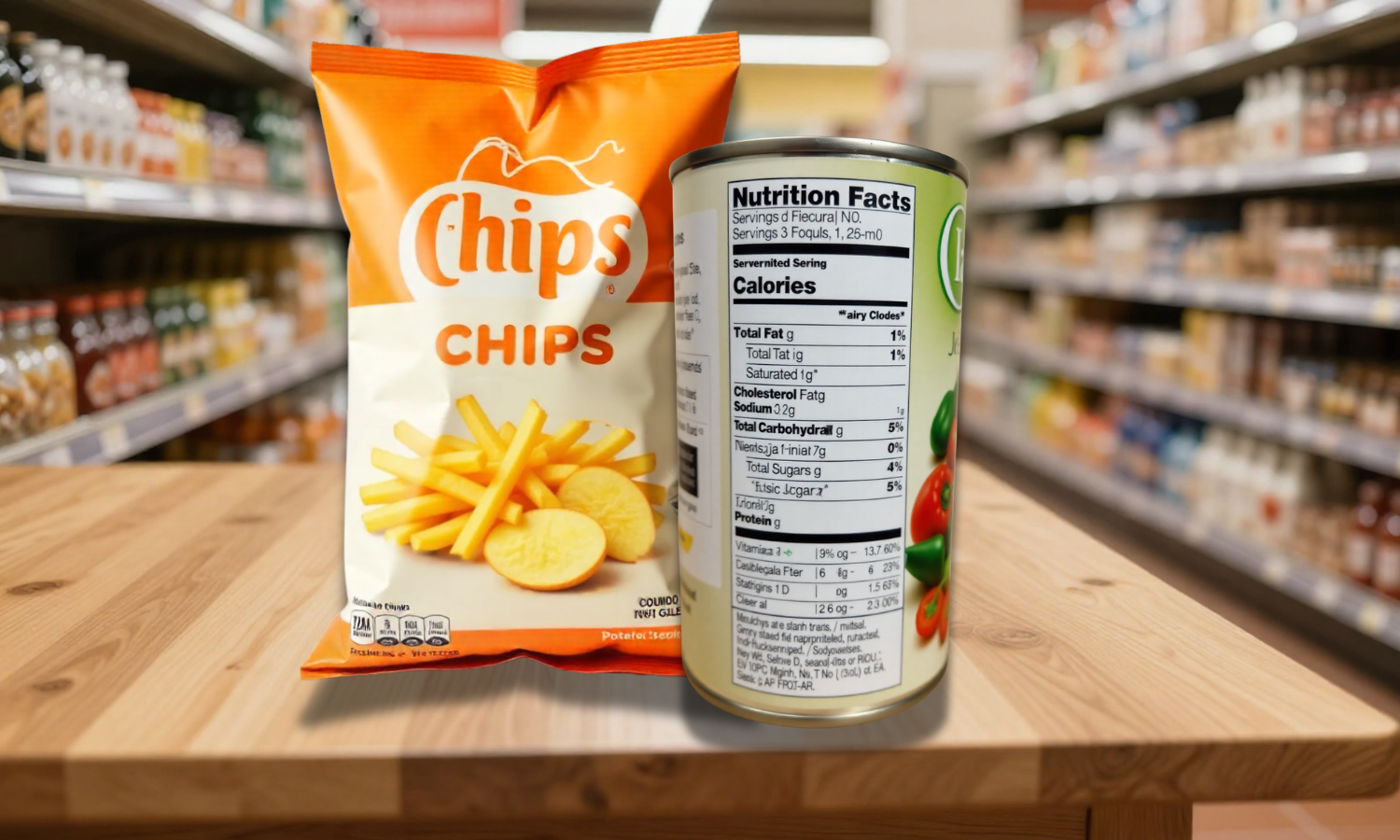
In an increasingly globalized market, food and beverage brands quickly discover that exporting a product is not just about sending it to another country; it requires fully adapting it to an entirely new regulatory environment. One of the most critical aspects is the nutrition label, which must comply with the regulations of the destination country to avoid penalties, customs rejections, or even the need to withdraw products already on shelves.
In this article, we present a clear and practical comparison of the nutrition labeling requirements in the United States, Mexico, and the European Union, three of the world’s most important and most demanding markets. If your brand is looking to expand internationally, this guide will help you understand what each region requires and how to anticipate regulatory changes.
Before diving into the differences, it’s worth remembering what a nutrition label is. Essentially, it is the printed declaration that shows the energy content and key nutrients of a food or beverage: calories, fats, carbohydrates, proteins, sodium, sugars, and other relevant components. While its purpose is universal, informing consumers and protecting their health, the way each region defines, organizes, and presents this information varies significantly.
And that’s where the complexity begins for exporters.
In the United States, the FDA strictly regulates nutrition labeling. Since the 2016 update, labels must reflect more realistic serving sizes, highlight calories with prominent typography, and declare added sugars, something not all regions require.
Additionally, since 2025 the FDA has been working on strengthening front-of-pack (FOP) labeling with a simplified system designed to help consumers quickly identify key nutrients such as sodium, saturated fats, and added sugars. Although the proposal is still in progress, it signals the direction the U.S. intends to take to align with global public health initiatives.
To enter the U.S. market, labels must comply with requirements related to format, English or bilingual presentation, units per serving and per container, and accurate declaration of key nutrients and % Daily Value. Even small variations, such as incorrect serving sizes or missing mandatory nutrients, can result in warning letters, border rejections, or financial penalties.
Mexico operates under NOM-051, one of the most recognized regulations in the world due to its mandatory front-of-pack warning seals. Unlike the U.S., where the FOP system is still evolving, Mexico already requires seals such as “Excess Sugars” or “Excess Saturated Fats” when a product exceeds established thresholds.
The nutrition table must appear in Spanish and include calories, carbohydrates, fats (total and saturated), proteins, sugars, sodium, and fiber. If a product wants to highlight a benefit (“high in fiber,” “source of protein”), the claim must be scientifically supported and comply with specific rules.
Mexico also restricts several visual elements:
This means that most international brands need a fully adapted label for Mexico, even if their designs are acceptable in other markets.
The European Union, primarily regulated by Regulation 1169/2011, requires that nutrition information be presented per 100 g or 100 ml, even if the product also chooses to show information per portion. This facilitates comparison between products but forces brands to recalculate values when coming from markets that prioritize serving sizes (such as the U.S.).
The mandatory information includes energy, total fat and saturated fat, total carbohydrates and sugars, protein, and salt. Vitamins, minerals, or other components can be added, but they cannot replace or overshadow mandatory data.
If a brand wants to include nutrition or health claims, it must follow Regulation (EC) 1924/2006, one of the strictest frameworks worldwide. Claims such as “low fat” or “high in fiber” may only be used if they meet precise criteria backed by scientific evidence.
The EU also requires tabular formats whenever space allows, metric units, and clear typography, with certain exceptions for very small packages.
Although the three markets share the goal of informing the consumer, their approaches differ:
These differences mean that a single label is rarely sufficient for all markets. In practice, brands often need three different versions, adjusted in format, language, nutrition tables, allowable claims, and graphic design.
To operate in multiple markets simultaneously, companies should begin with a precise technical analysis that includes:
Failing to do so can result in costly re-labeling, loss of inventory, or inability to commercialize the product in the destination market.
Understanding the differences between FDA regulations, NOM-051, and European rules not only helps you avoid penalties; it positions you closer to the right consumer. Clear, accurate, and region-specific labeling builds trust, facilitates audits, and strengthens your brand’s competitiveness in international markets.
If your company is ready to export, or needs to update its current labels, we can support you from nutritional analysis to final compliance validation.
Want to ensure your products meet FDA, NOM-051, and EU requirements?
Contact us for a free assessment and a personalized regulatory compliance plan.
In an increasingly globalized market, food and beverage brands quickly discover that exporting a product is not just about sending it to another country; it requires fully adapting it to an entirely new regulatory environment. One of the most critical aspects is the nutrition label, which must comply with the regulations of the destination country to avoid penalties, customs rejections, or even the need to withdraw products already on shelves.
In this article, we present a clear and practical comparison of the nutrition labeling requirements in the United States, Mexico, and the European Union, three of the world’s most important and most demanding markets. If your brand is looking to expand internationally, this guide will help you understand what each region requires and how to anticipate regulatory changes.
Before diving into the differences, it’s worth remembering what a nutrition label is. Essentially, it is the printed declaration that shows the energy content and key nutrients of a food or beverage: calories, fats, carbohydrates, proteins, sodium, sugars, and other relevant components. While its purpose is universal, informing consumers and protecting their health, the way each region defines, organizes, and presents this information varies significantly.
And that’s where the complexity begins for exporters.
In the United States, the FDA strictly regulates nutrition labeling. Since the 2016 update, labels must reflect more realistic serving sizes, highlight calories with prominent typography, and declare added sugars, something not all regions require.
Additionally, since 2025 the FDA has been working on strengthening front-of-pack (FOP) labeling with a simplified system designed to help consumers quickly identify key nutrients such as sodium, saturated fats, and added sugars. Although the proposal is still in progress, it signals the direction the U.S. intends to take to align with global public health initiatives.
To enter the U.S. market, labels must comply with requirements related to format, English or bilingual presentation, units per serving and per container, and accurate declaration of key nutrients and % Daily Value. Even small variations, such as incorrect serving sizes or missing mandatory nutrients, can result in warning letters, border rejections, or financial penalties.
Mexico operates under NOM-051, one of the most recognized regulations in the world due to its mandatory front-of-pack warning seals. Unlike the U.S., where the FOP system is still evolving, Mexico already requires seals such as “Excess Sugars” or “Excess Saturated Fats” when a product exceeds established thresholds.
The nutrition table must appear in Spanish and include calories, carbohydrates, fats (total and saturated), proteins, sugars, sodium, and fiber. If a product wants to highlight a benefit (“high in fiber,” “source of protein”), the claim must be scientifically supported and comply with specific rules.
Mexico also restricts several visual elements:
This means that most international brands need a fully adapted label for Mexico, even if their designs are acceptable in other markets.
The European Union, primarily regulated by Regulation 1169/2011, requires that nutrition information be presented per 100 g or 100 ml, even if the product also chooses to show information per portion. This facilitates comparison between products but forces brands to recalculate values when coming from markets that prioritize serving sizes (such as the U.S.).
The mandatory information includes energy, total fat and saturated fat, total carbohydrates and sugars, protein, and salt. Vitamins, minerals, or other components can be added, but they cannot replace or overshadow mandatory data.
If a brand wants to include nutrition or health claims, it must follow Regulation (EC) 1924/2006, one of the strictest frameworks worldwide. Claims such as “low fat” or “high in fiber” may only be used if they meet precise criteria backed by scientific evidence.
The EU also requires tabular formats whenever space allows, metric units, and clear typography, with certain exceptions for very small packages.
Although the three markets share the goal of informing the consumer, their approaches differ:
These differences mean that a single label is rarely sufficient for all markets. In practice, brands often need three different versions, adjusted in format, language, nutrition tables, allowable claims, and graphic design.
To operate in multiple markets simultaneously, companies should begin with a precise technical analysis that includes:
Failing to do so can result in costly re-labeling, loss of inventory, or inability to commercialize the product in the destination market.
Understanding the differences between FDA regulations, NOM-051, and European rules not only helps you avoid penalties; it positions you closer to the right consumer. Clear, accurate, and region-specific labeling builds trust, facilitates audits, and strengthens your brand’s competitiveness in international markets.
If your company is ready to export, or needs to update its current labels, we can support you from nutritional analysis to final compliance validation.
Want to ensure your products meet FDA, NOM-051, and EU requirements?
Contact us for a free assessment and a personalized regulatory compliance plan.